Image from book page 171
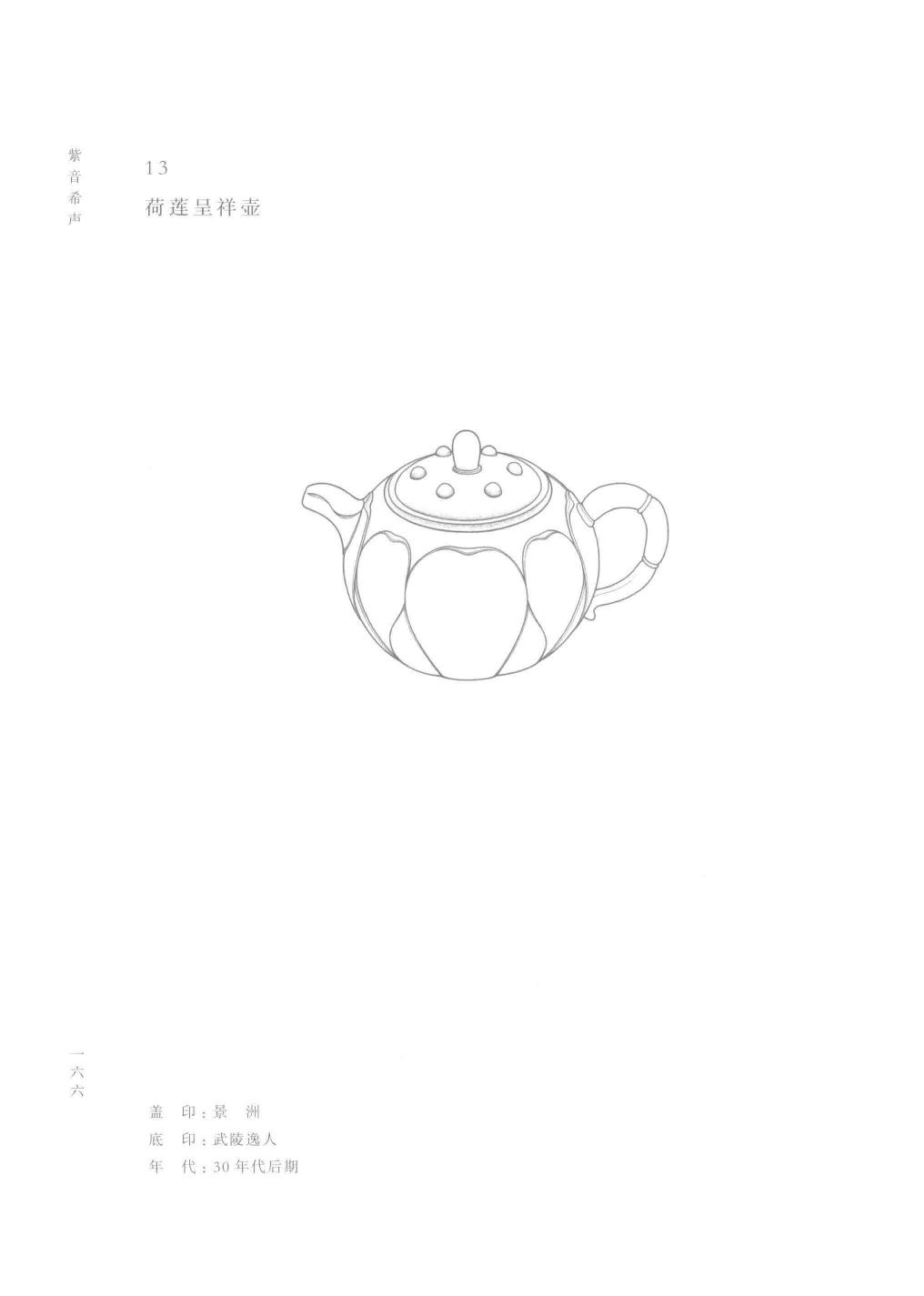
Hé Lián Chéng Xiáng Hú
Pour tea, invite luck — the lotus never disappoints.
The Hé Lián Chéng Xiáng teapot blooms straight from the marsh — its surface adorned with lotus flowers and leaves, a plant that Chinese culture has celebrated for centuries as a symbol of purity, grace, and good fortune. Crafted in the late 1930s from the legendary Zisha clay of Yixing, this pot turns every tea session into a small ceremony of auspicious beauty. It's the kind of piece where even pouring a cup feels like an act of poetry.
The lotus became a beloved symbol in Chinese art partly thanks to a famous 11th-century essay by scholar Zhou Dunyi, who praised it for rising spotless from muddy water — making it the ultimate symbol of integrity and elegance.
Original Source Details ▾
Original Chinese Text 原文
化 神 荷血 ,中国文化意象的重要表达方式 ,从《诗经 》“山有扶苏 、隐有和荷 华"`《楚酬》"制莹荷以为衣今 , 集美蓉以为党”,到周敦颐的《爱莲说 》, 莲的形象贯穿于中国几千年的文学 、艺术 、宗教作品之中 。 荷划也常用于紫砂造型艺术中 。 顾景舟的这款“荷莲呈祥考”,壶身关 绽放的荷花,盖似饱满的莲莲 ,的子周围内灸六粒莲子 ,灵动可爱 。权做夭 节状, 饱满挺括,一弯流由莲叶包庄,微风徐来,花枝旭婷 。 此壶曾在 1994年10月 16 日“金陵 "94 秋季书画陶网精品拍卖会” 相,创当时陶艺部分的最高成交价 。 训 阔1 ER