Image from book page 223
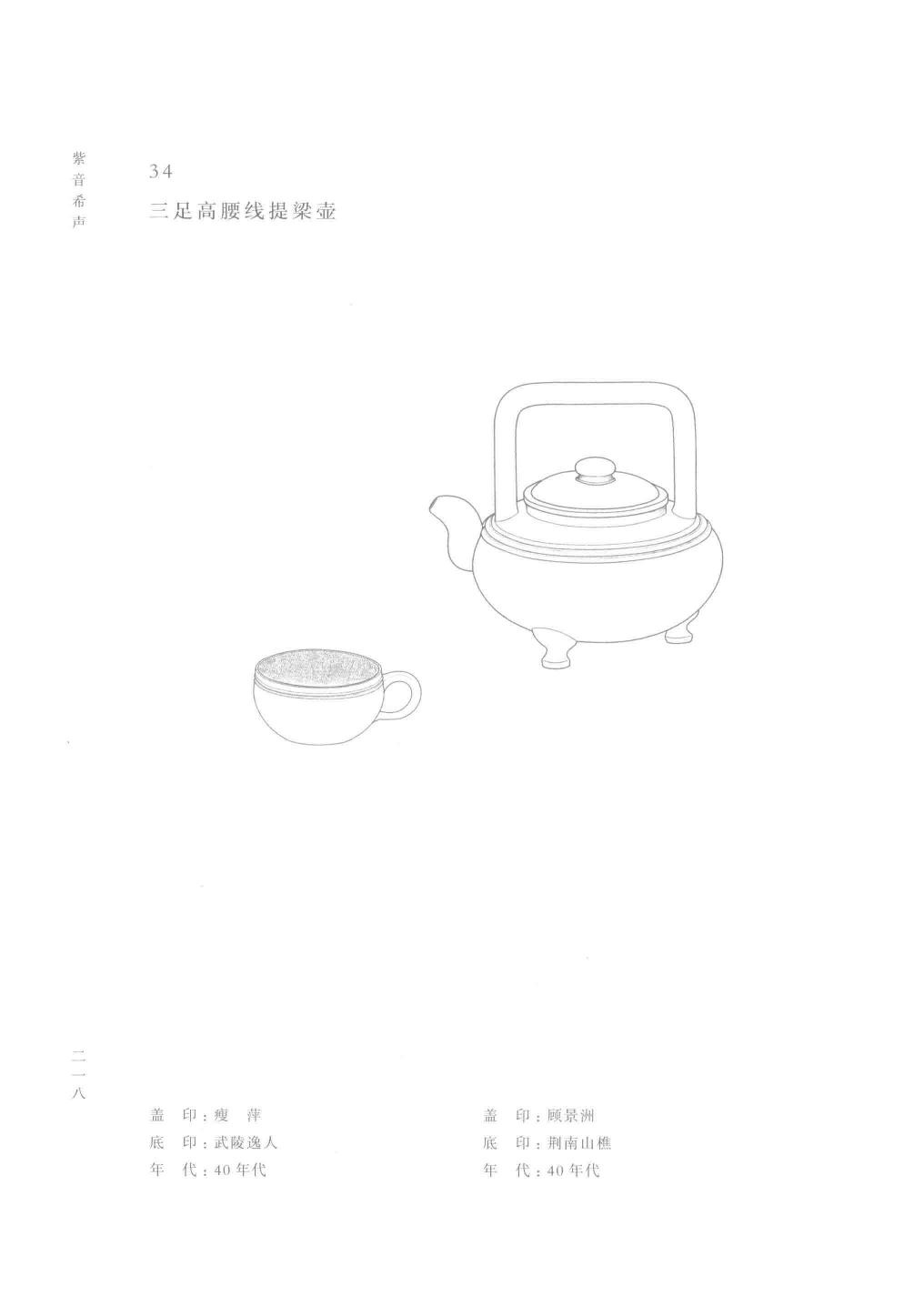
Sān Zú Gāo Yāo Xiàn Tí Liáng Hú
Three legs, one bold arch, zero compromises.
Inspired by ancient Chinese bronze ritual vessels, this striking teapot stands on three sturdy elephant-foot legs that give it an almost ceremonial presence on the table. The high-waisted body curves generously outward before sweeping up to a dramatic overhead handle — called a tí liáng — which arches over the top like a graceful bridge. It's the kind of teapot that feels less like kitchenware and more like a piece of living history.
The overhead 'tí liáng' handle isn't just stylish — it keeps your hand away from the hot body of the pot, making it surprisingly practical for brewing teas that need near-boiling water, like pu-erh or aged oolongs.
Original Source Details ▾
Original Chinese Text 原文
“三足高腰线提梁壶”造型源自古代青铜礼器,身简扇圆敦厚 ,洗圆亿 满, 象足流线起伏变化 ,呈瞻状支撑 ,霜气中不失礼乐之赴 ; 索盖内嵌 ,上 饰宝珠钮,纽型与盖面弧度及身简外廓过渡衔接自然 。 两弯流半切式骨入壶身,厚拙而不显突元 。圆线提梁折成方状,与过 身方圆相呼 ,虚实相应,三道半圆线依次环于索身肩部 , 有效地平衡了提梁 线折弯后上部空间的视觉重心 。 此壶造型光素简洁 , 古意内然, 具备典型的民国后期特征,传统而不失时 代气息,, 这与顾景舟师古不泥 ,把创新融于传统的一贯坚持密不可分,他说 : 我们应该认真学习优良传统 ,取其精华 ,以充实自己的设计构 思 ,始能创作出更新的作品 。 探索壶艺之创新 ,既要有取舍地保持传统基础上的优良特色 ,又 要能吸收其他姐妹艺术中可以借鉴的东西 。如古代的青铜 、玉器 、石 刻、砖驹,现代工艺美术和建筑艺术,都能有息息相通之处 。' =弯嘴的三足高腰线提梁过 1 。顾景舟、高海庚著 :《壶艺的继承与创新 》 载史俊党 、盛畔松主编《紫砂春秋 》 上海 : 文汇 出版社 ,1991 年10 月版, 第187 页