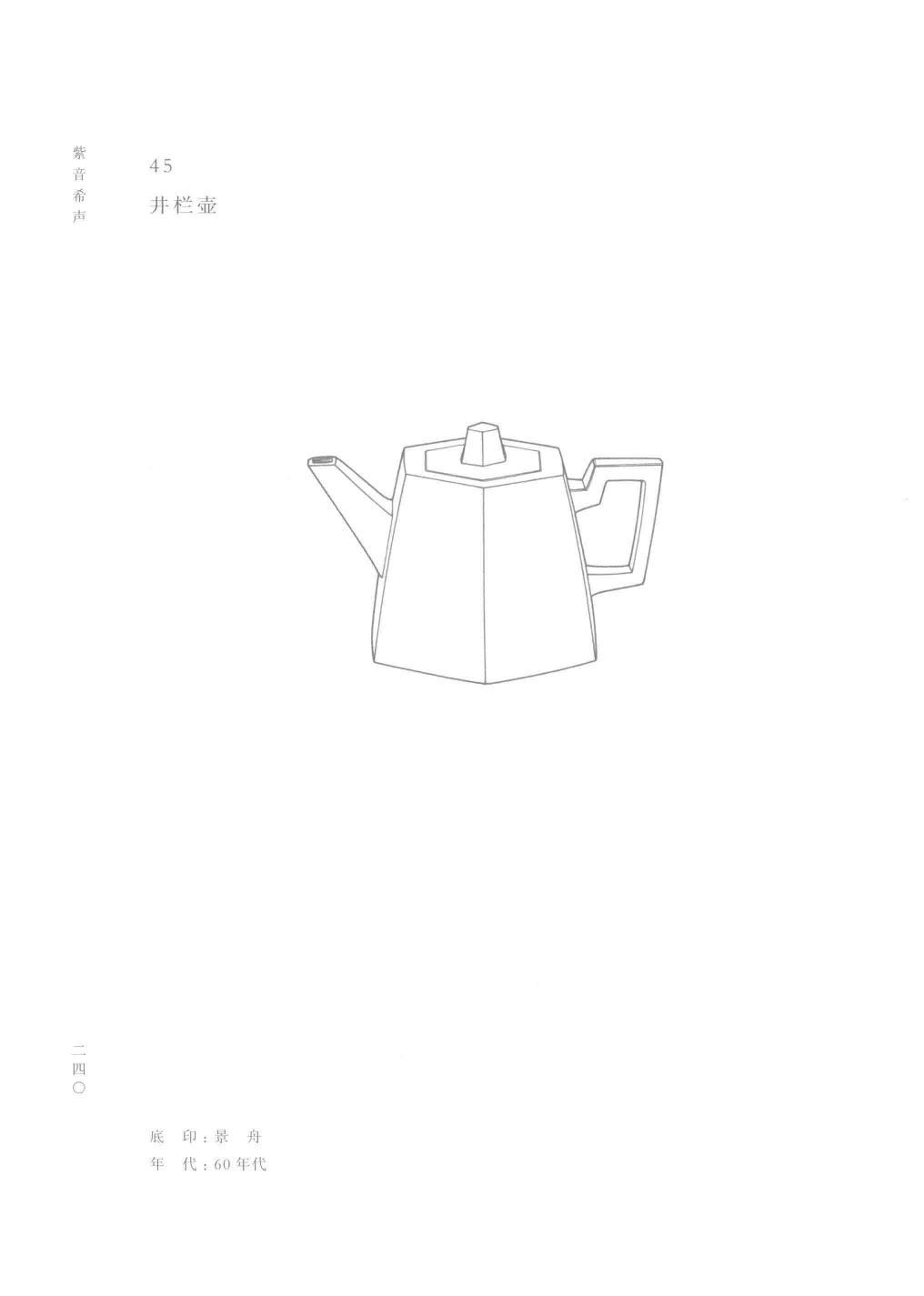
Image from book page 245
Jǐng Lán Hú
A village well, reimagined in stunning Zisha clay.
The Jǐng Lán Hú, or 'Well Curb' teapot, takes its name from the wooden railings that once ringed traditional Chinese water wells — those humble, everyday structures that kept villagers safe as they drew water. Its clean, cylindrical form with a gently defined rim echoes that sturdy, purposeful shape, turning a piece of village life into a quietly elegant work of art. Simple yet deeply satisfying, this teapot proves that the best inspiration often comes from the most ordinary places.
The Well Curb style has been a favorite among scholars and potters for centuries because its restrained, geometric form is considered a perfect canvas for showcasing the natural beauty of Yixing's famous purple clay — no flashy decoration needed.
Original Source Details ▾
Original Chinese Text 原文
化 神 井栏 ,水井上方的于栏,《释例 》上日 :“以本为框,周臣于并 ,防人之 陷也 。其用与垣同, 其质则木而非土 。 ”' 井栏与人们的生活息息相关,是紫 砂造型艺术的素材来源之一 。清星期 ,陈曼生以他生活的溧阳风貌物产为创 作旨趣 ,与杨彭年合作创作“并栏过”。 顾景舟共创作“六方井栏水平索”“、“高井栏索”、“铸井栏过”三种式样 。 “六方井栏水平索”创作于 20 世纪 60 年代, 壶以纯净紫泥为胎, 色泽温 润古雅 。 取形六方形井栏 ,呈下大上小的斜坡状,高度仅为 54 毫米,壶 整有力度,线条清晰规整 ,块面弧度过渡自然 ,壶体小巧玲珑 ; 平艇盖与过 身融为一体 ,密合且通转无得,钮取索身造型 ,统一协调 ,四方直流呈向上 收敛式 ,四方折角轰的上部作转折处理 。此壶小巧玲珑,是把玩怡情的佳品 。 1了丁福保编 ;《说文解字庆林 ( 第六册 )》 北京 : 中华书局 ,1988 年版, 第 2348 页