Image from book page 269
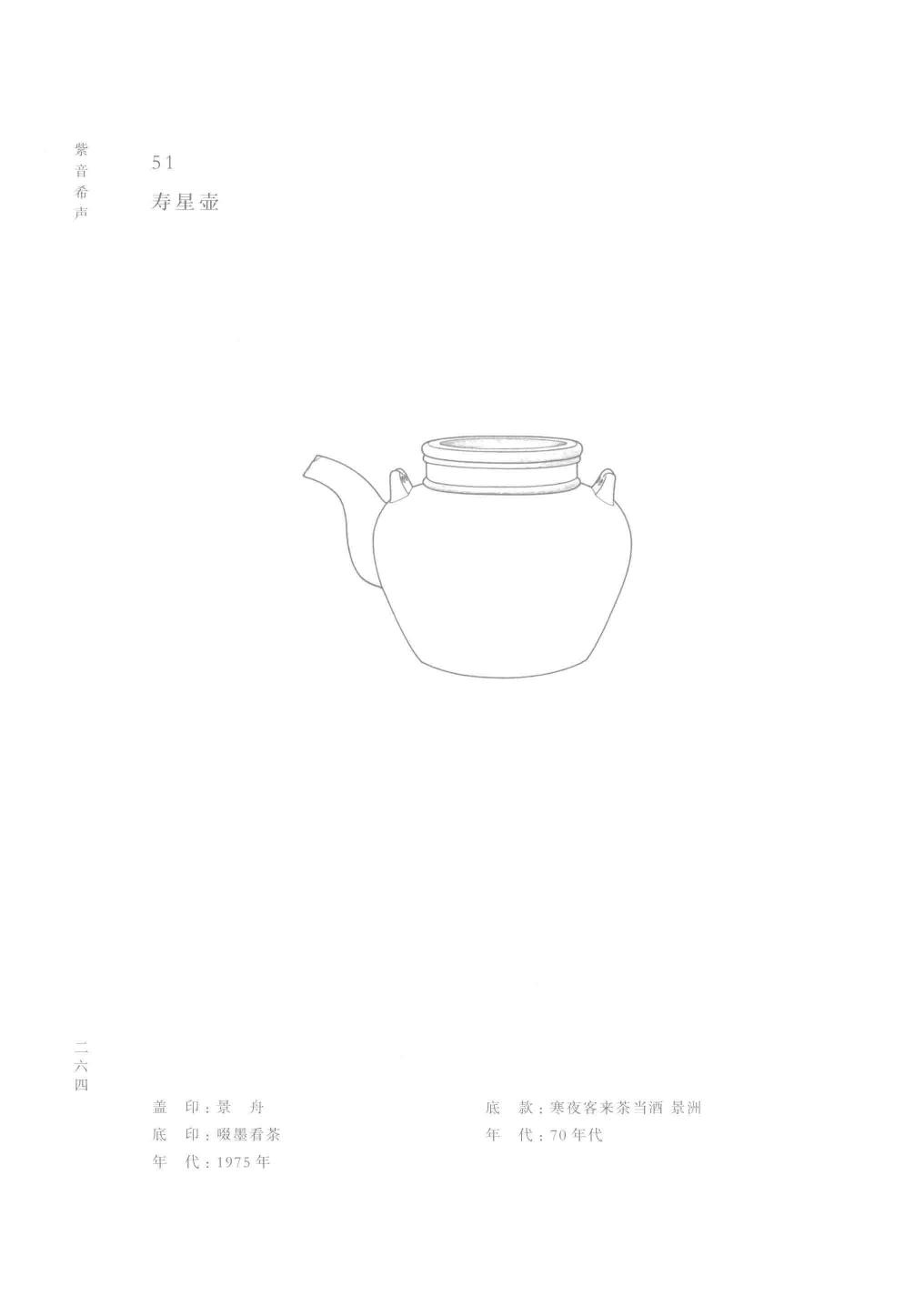
Shòuxīng Hú
The people's teapot, blessed by the god of longevity.
Named after Shòuxīng, the beloved white-bearded god of longevity in Chinese folklore, this teapot brings a little celestial good fortune to your tea table. A workhorse of rural northern China, it was made big enough to keep hardworking farmers fueled through long days in the fields — practical, sturdy, and full of character. The example from the 1970s even carries a poetic inscription comparing tea to wine, proving that even an everyday pot can hold a bit of soul.
Shòuxīng pots were produced in a range of sizes — from small to extra-large — making them one of the few classic Yixing styles specifically designed to scale up for big, thirsty crowds rather than refined, small-cup tea ceremonies.
Original Source Details ▾
Original Chinese Text 原文
“寿星壶”是紫砂行货的经典造型 ,流行于北方农村市场,由于体型较 大、物美价廉,, 是农村人田间地头的日用器严, 根据大小,寿星过可分为海 寿星 、放寿星 、中寿星 、小寿星 。“文革 ”时期 ,因避“四旧”,“寿星壶” 曾更名为“圆形壶 ”。 “寿星壹”虽为农村下地干活时携带的水具 ,是大路货 ,但顾景舟认为 制作“寿星壶”并不简单 ,不但要有完美的造型 ,而且也考验制作者的技 艺水平 : 不要小看“寿星壹”,认为它是低俗的粗货 ,农家使用而已 。其 实由于做工的不同 ,既可以做成普通的实用塌,也可以做成一件了不 起的艺术品 ,因为它本身造型很美 。如果做工精致的话 ,整个泥条 、 泥片不会浪费一块 ,可以做得非常完美 。所有制壶的基本功都能通过 “寿星过”体现出来 。 中景舟做的“寿星壶”,端庄俊秀 ,直口展边 ,盘式压盖 ,肩部挺括 , 极具气度,腹部渐收 , 二索流出水流畅 , 造型简洁敦朴 ,弥足珍 1 史俊棠主编 :《紫砂研究 ( 第二辑 )》 上海 : 上海古籍出版社 ,2007 年 12 月版,第 189 页 化 神 黄冰人