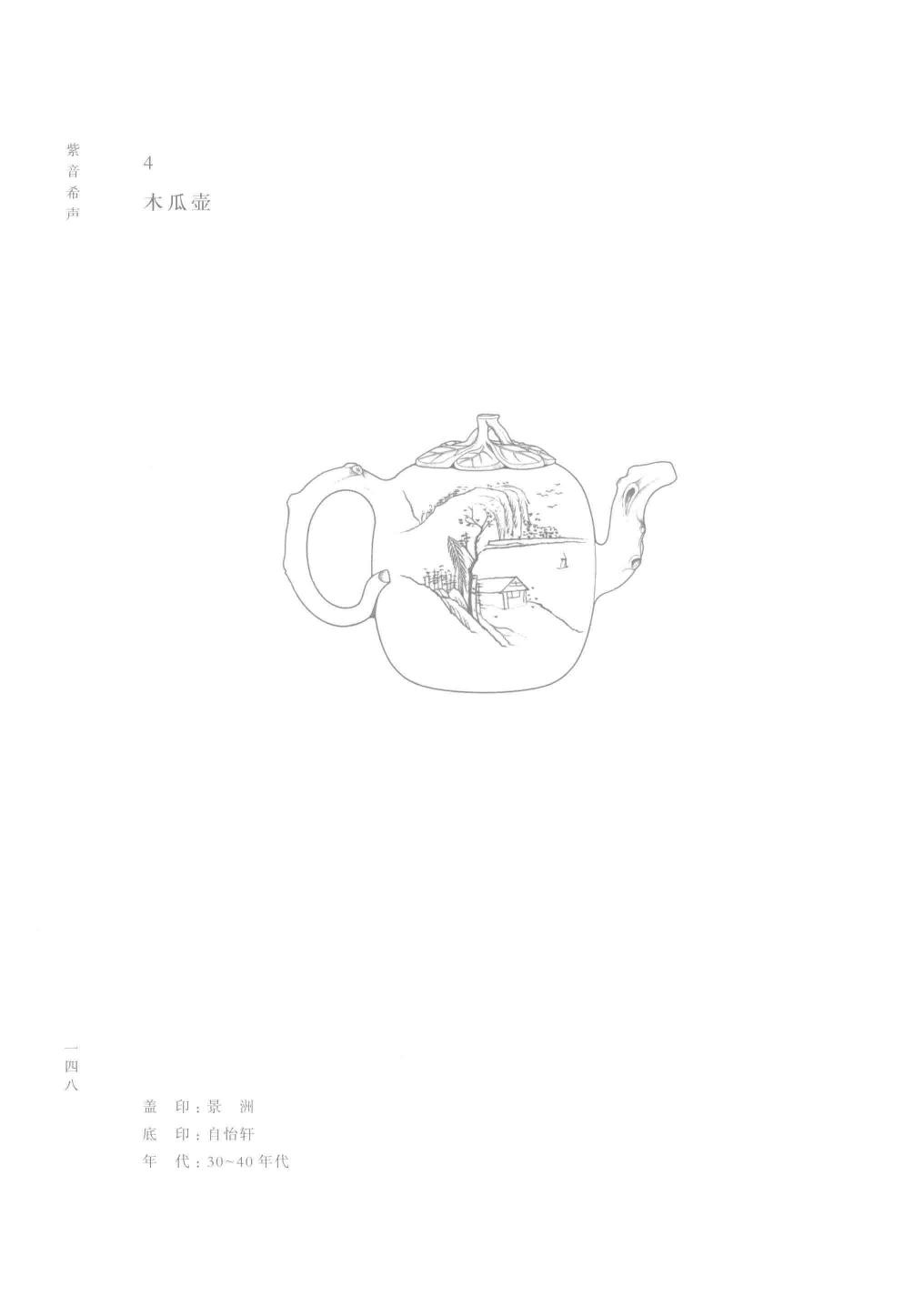
Image from book page 153
Mùguā Hú
A teapot that turns tea time into a thank-you.
The Mùguā Hú, or Wood Apple Teapot, takes its name from an ancient Chinese poem about gifts, gratitude, and the beauty of giving — making every pour feel like an act of kindness. Shaped to evoke the plump, rounded form of the wood apple fruit, this charming pot from the 1930s–1940s blends good fortune with everyday elegance. It's the kind of teapot that carries a story in its curves.
The wood apple (mugua) appears in China's oldest poetry anthology, the Book of Songs, as a symbol of reciprocal kindness — so this teapot is essentially a 3,000-year-old love poem you can brew tea in.
Original Source Details ▾
Original Chinese Text 原文
化 神 木瓜在中国传统文化中属吉祥物 ,题材取自《诗经》:“投我以木瓜 , 报之以芒据 。 ”隐喻饮水思源 ,知恩善报 .“木瓜索”,民国时期流行款式 , “木瓜壶”以瓜为体 , 时为盖 ,蔷为流 、扫,巧妙有度 , 展现田园刁适静说 的氛于 。 顾景舟的“木瓜壶”身简比前人作品骨架略微放高 ,更具亭匀雅致 , 柔中带刚 。壶嘴则折作疤节状, 布局合理 ; 壶轰 、壶盖上枝叶攀生,叶葵 、 叶脉点组巧妙,透发幽静与含蓄的自然美 ,索身只贴一叶, 简约生动 。 四 九